
Two young people. Two continents. One supply chain.
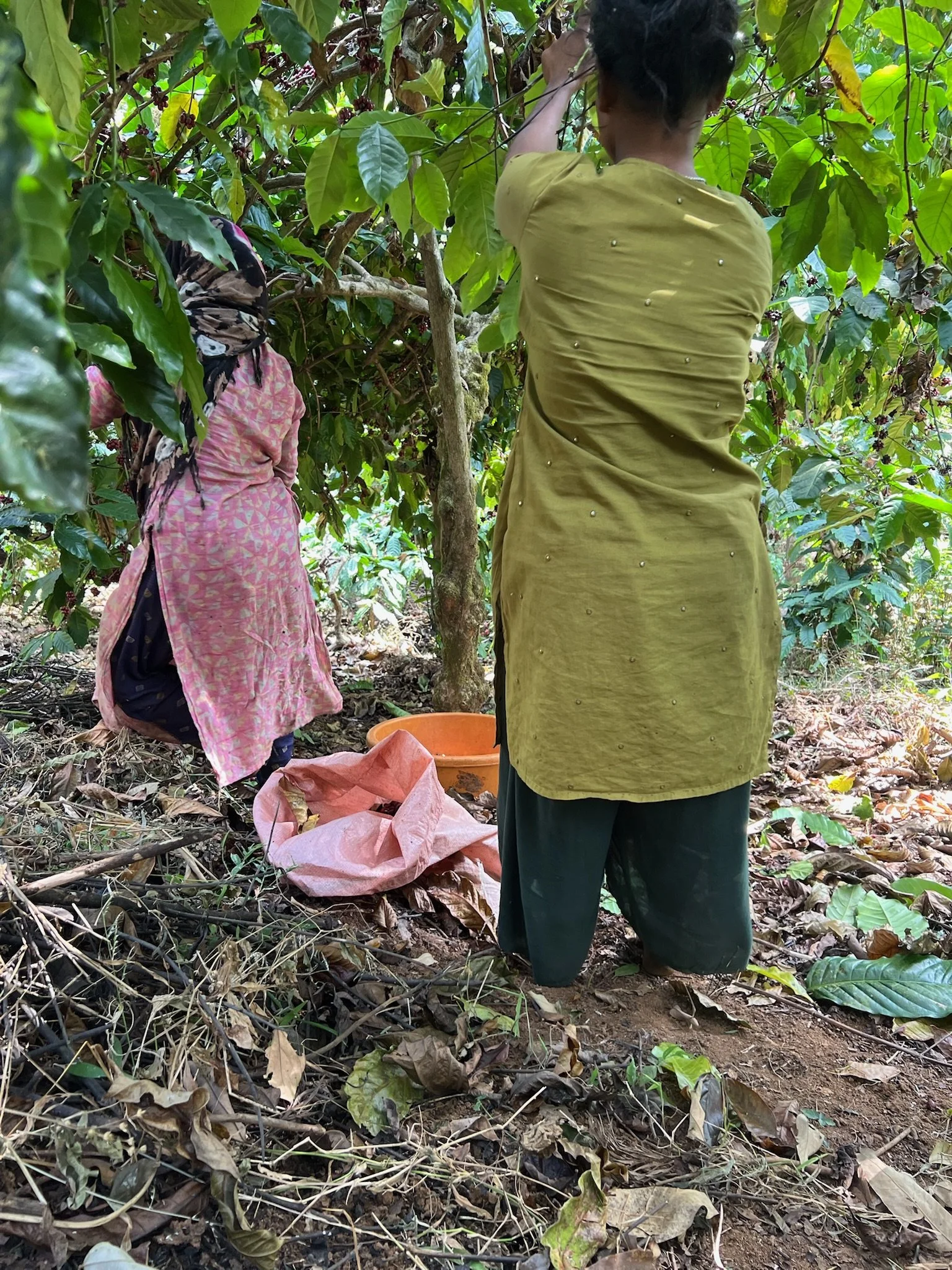
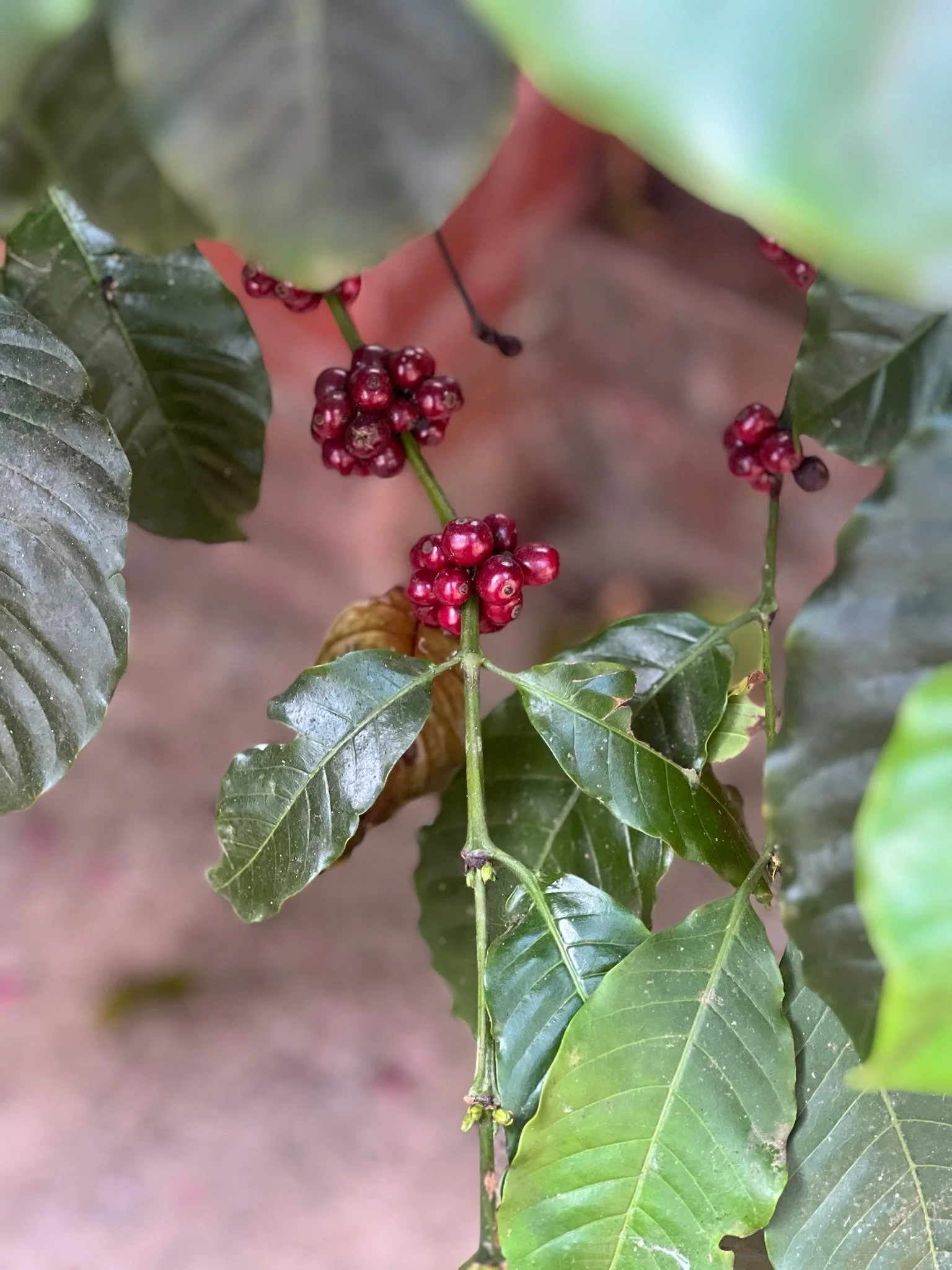
In the southern hills of India, I reach up and pick a round, red coffee cherry from its branch.
Sweat rolls down my back. My feet sink into the damp earth as I stand and stretch, feeling the pull in my lower spine. This kind of labor is so different from my normal desk job—sending emails, sitting in meetings, reviewing budgets. I like the weight in my muscles. I like the clarity that comes from working with my hands.
But I know that feeling is romanticized.
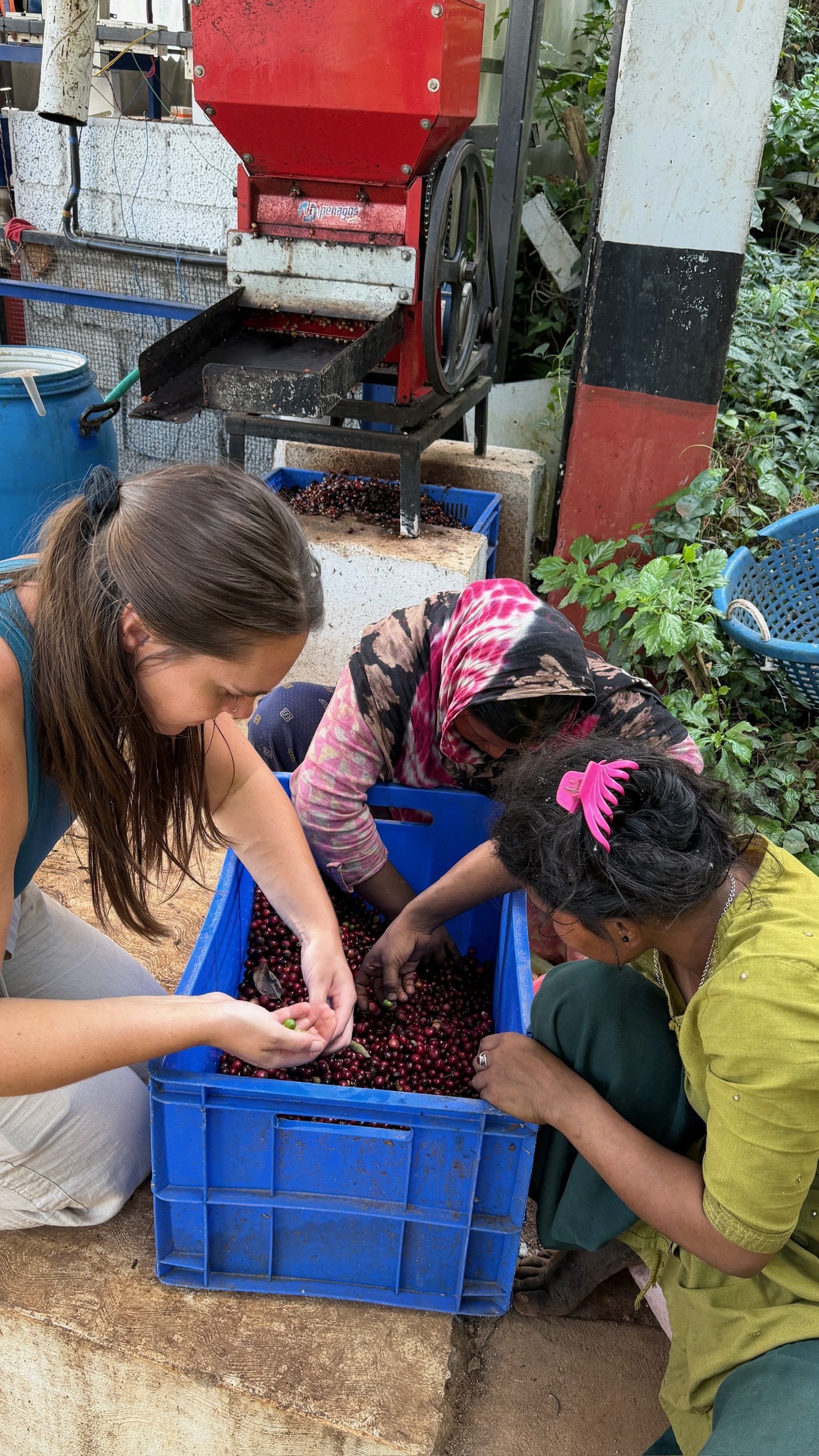
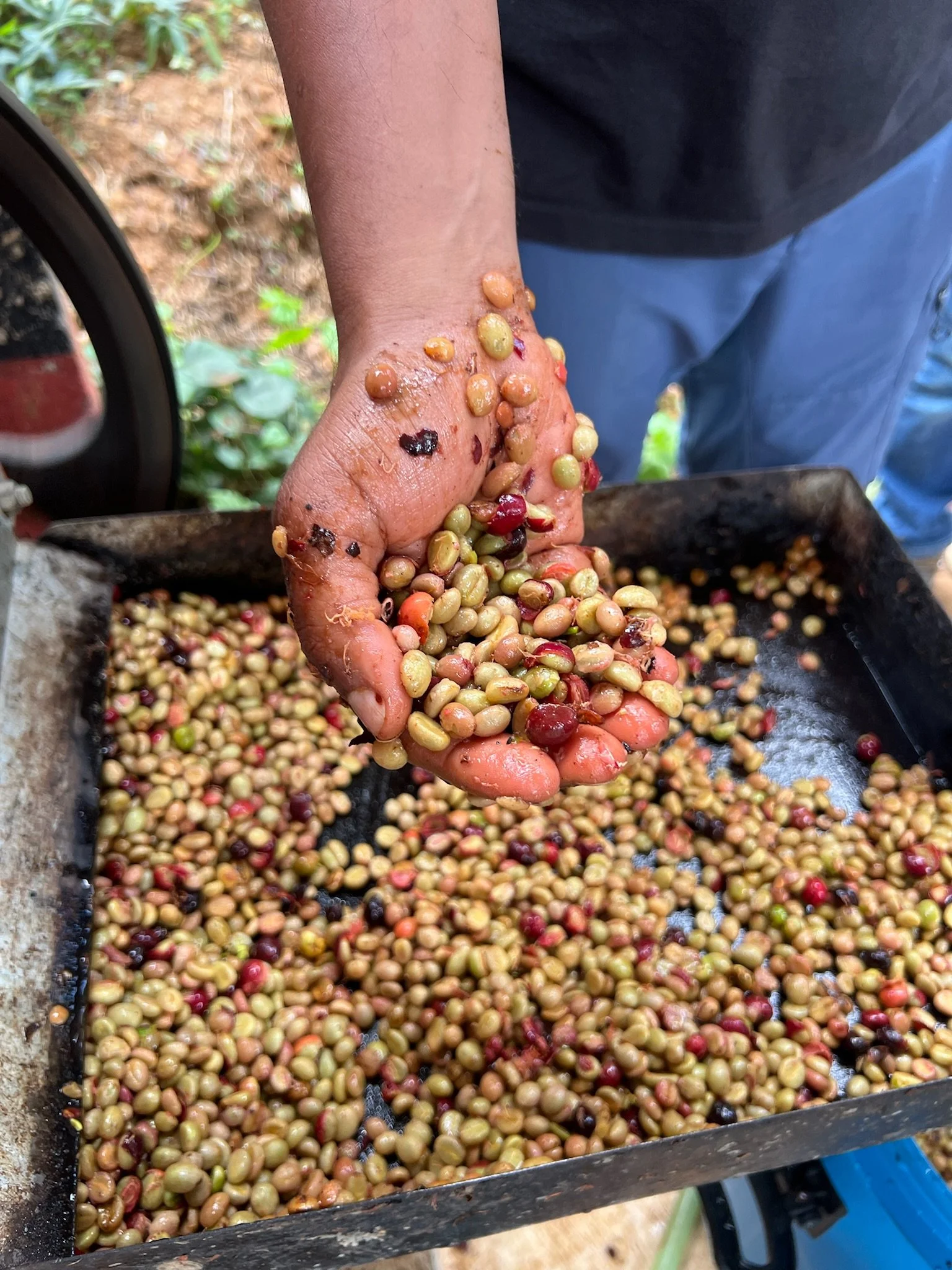
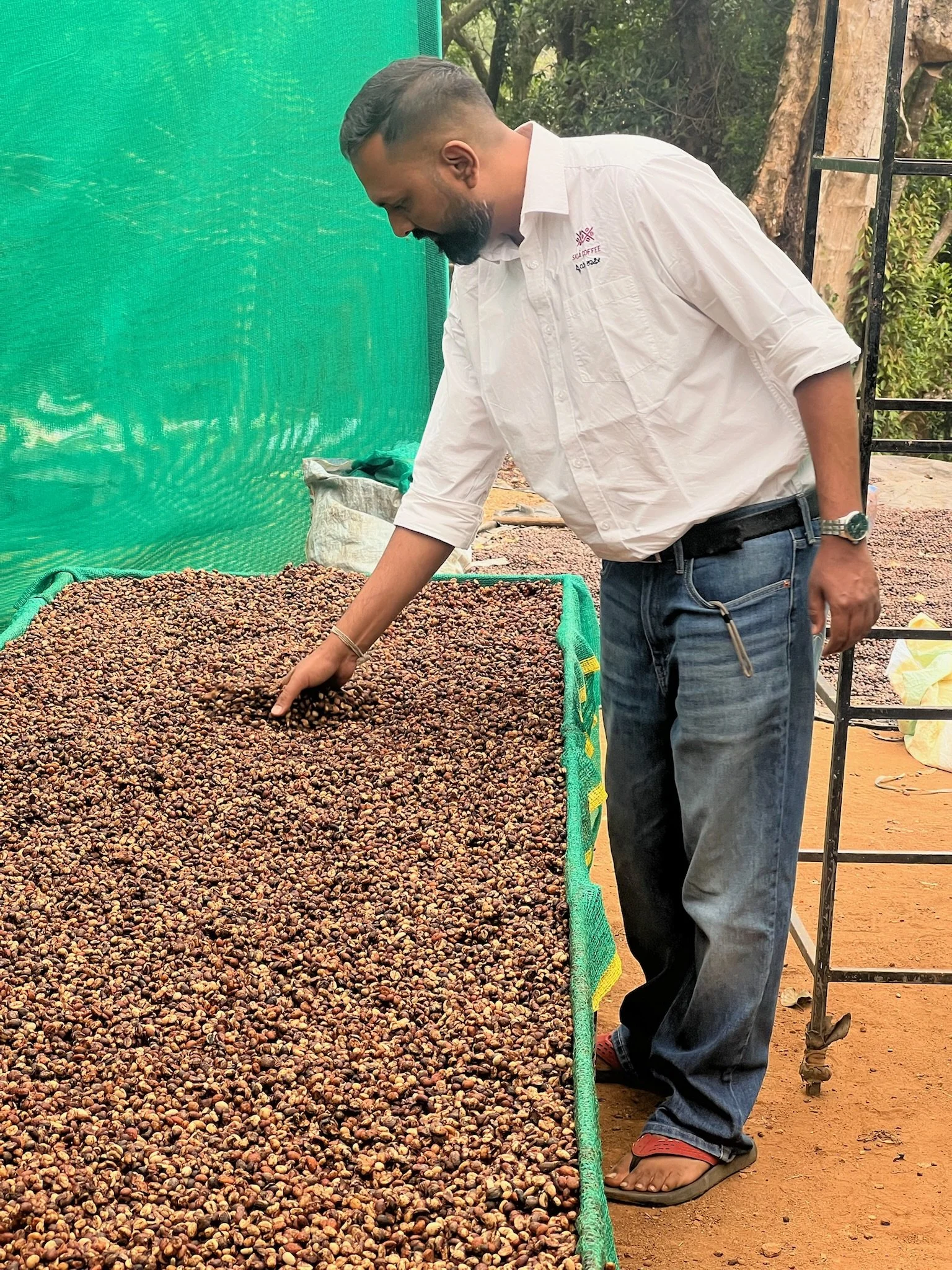
Carley sorting through coffee berries in India, January 2026
After several days of this, I would ache. My hands would blister. My back would protest. For the farmers here, this isn’t a reflective experience or a leadership immersion trip. It’s survival. It’s generational. It’s their livelihood.
But it’s an inequitable one: roughly 90% of the total value of coffee remains in the Global North—the consuming countries—while only 10% stays in the Global South, where coffee is grown.
The hands that do the hardest work receive the smallest share.
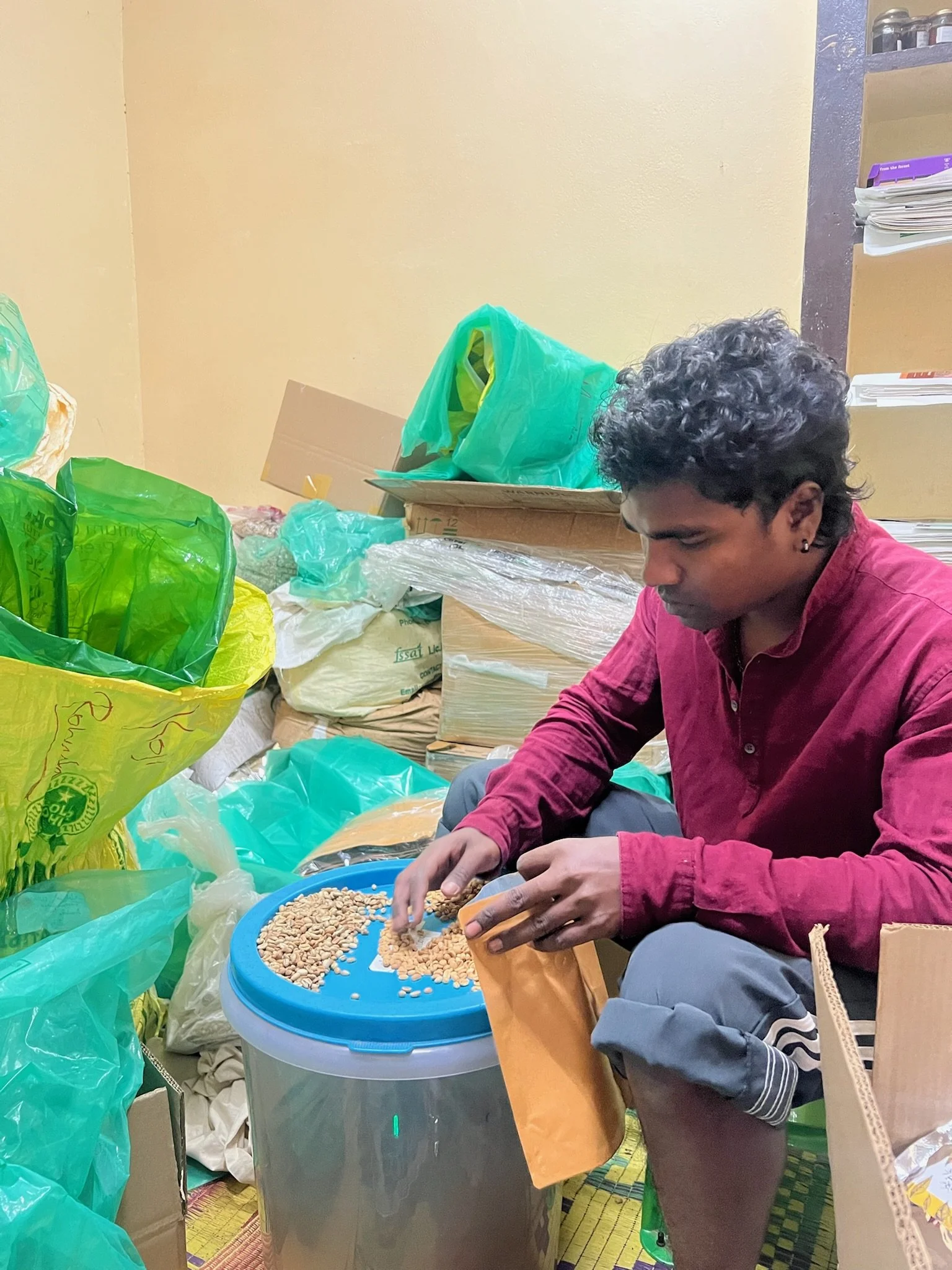
In a small room with light yellow walls, a young man named Ravindra bags samples of green coffee for me. He sits on a bucket, surrounded by bags of green coffee, packaging supplies, and a scale. His hands move with quick, precise motions. He pushes the broken and defective beans aside, forming a small pile of rejects. They don’t have a sorting machine here, so everything is done by hand. Satisfied with the beans left, he packages them in small brown bags and seals them with a pink hair straightener. Giving them to me, I clutch the samples to my chest.
The hands that do the hardest work receive the smallest share:
Roughly 90% of the total value of coffee remains in the Global North—the consuming countries—while only 10% stays in the Global South, where coffee is grown.
I have traveled halfway around the world to get these. A lot of work has gone into them. A lot of hope will travel home with them.
I’m here meeting with the Third Share Project, a new initiative working with four tribal communities designated as Particularly Vulnerable Tribal Groups, a classification for communities in India facing extreme marginalization.
Local leaders are working to change that. Their vision is simple but powerful: invest in the next generation of coffee farmers. Through training, capital, and technical assistance, their goal is to help young farmers improve the quality of the coffee they produce, expand market access, and build economic stability so that young people can not just survive, but thrive.
The goals sound familiar: invest in young people, create dignified work, build permanent pathways out, increase independence.
Wildflyer Coffee is a local nonprofit known for serving youth experiencing homelessness and housing instability in the Twin Cities. Our shops are rooted in Minneapolis and St. Paul. Our baristas are local young people building stability, income, and community - And yet, our mission is built on a global commodity.
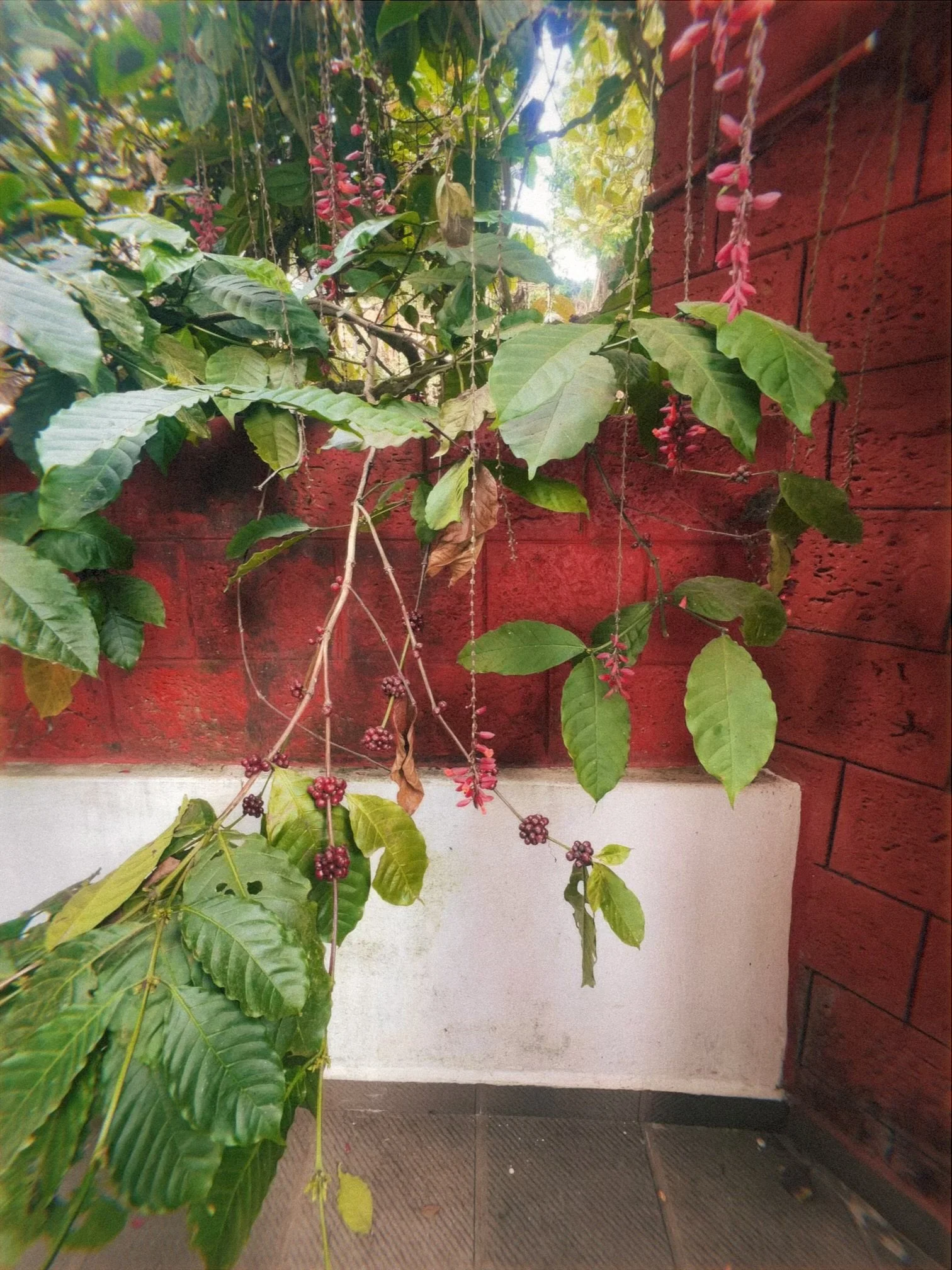
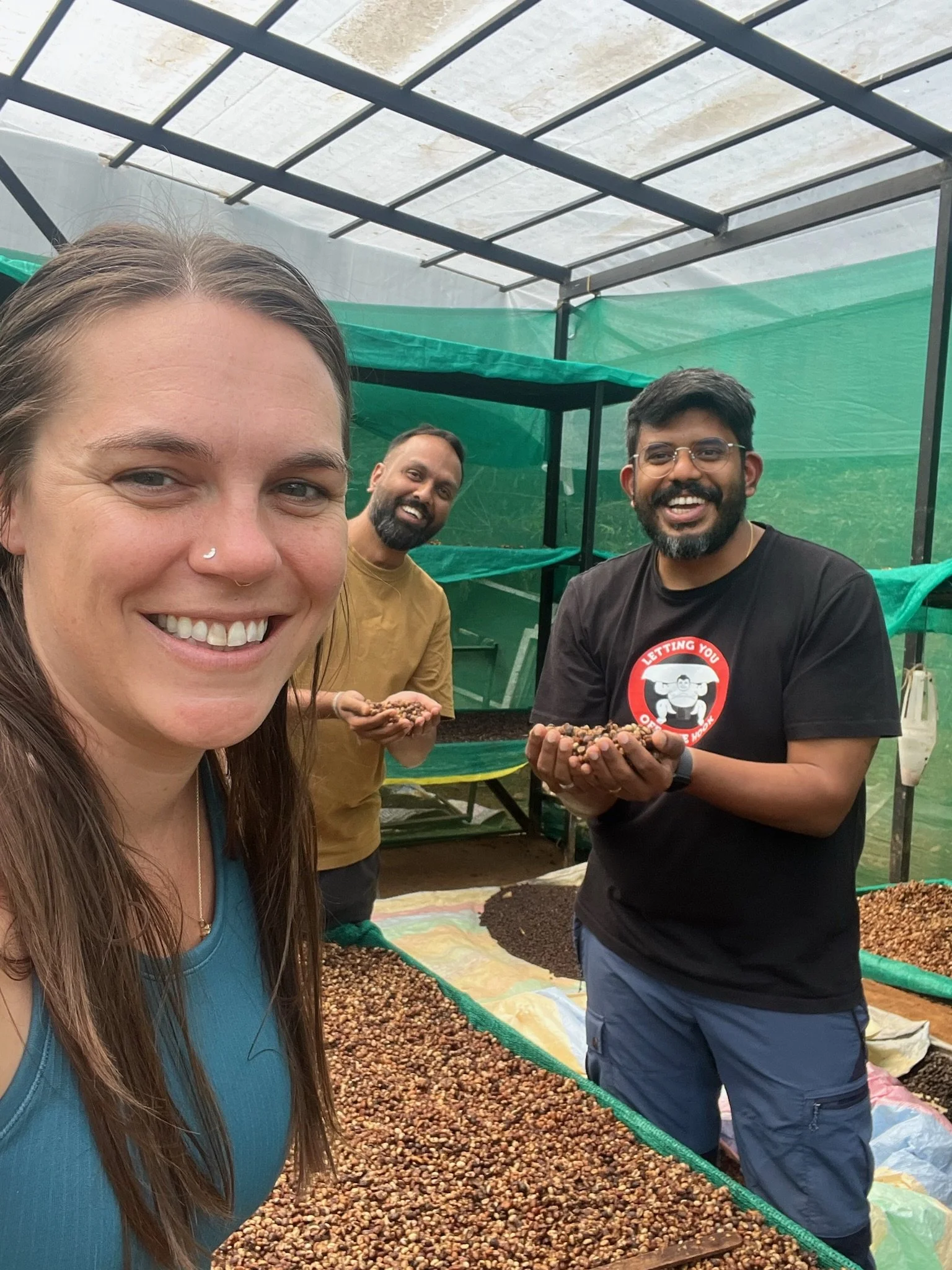
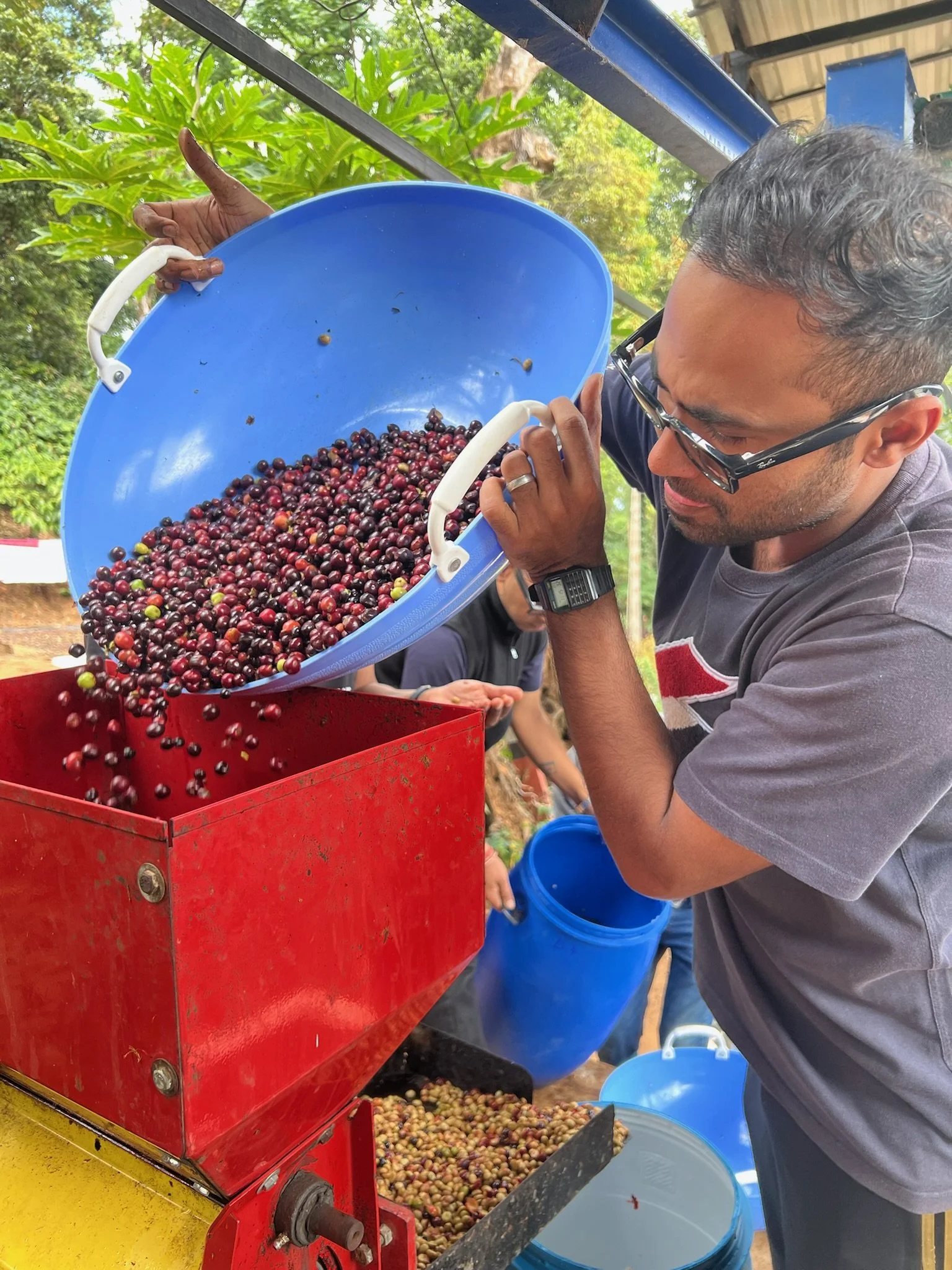
From Costa Rica to Ethiopia and, hopefully, soon, India, we rely on a vast network of farmers to harvest, process, package, and ship the coffee we roast and serve.
Without them, Wildflyer Coffee would cease to exist. But right now, for every $5 latte sold in-store, young people like Ravindra receive only pennies for the coffee they grow.
At Wildflyer, we often talk about equitable employment, living wages, dignified work environments, and investing in youth on the margins of society. The ones that traditional systems have overlooked. If we believe in that here, we must believe in that there, too. Justice cannot stop at the cafe door.
So we’re asking a bigger question: What would it look like if our sourcing practices reflected our mission as clearly as our hiring practices do?
That’s why Wildflyer is working toward a bold goal: to shift our sourcing toward coffee farms that are directly connected to youth development initiatives. Farms investing in education. In community infrastructure. In leadership development. In economic mobility for the next generation.
If coffee is the vehicle for transformation here in Minneapolis, it can be a vehicle for transformation elsewhere too.
Three small brown bags of green coffee now sit in my office on Minnehaha Avenue. Soon I’ll bring them to our roastery, where we will sample roast and cup them, tasting for notes of fruit, body, and balance: Coffee picked, processed, and packaged by Ravindra.
If all goes well, one day it will be poured into a cup and served to you by one of our youth here in the Twin Cities.